Read perfume notes as a shortlist, not a promise. Identify the main scent family, check the heart and base as well as the opening, then compare a sample with fragrances you already know. Notes cannot predict an exact wear time or similarity score.
Begin with what you enjoy and dislike
Choose two impressions you enjoy and one you want to avoid. For example, you may like citrus and woods but dislike a syrupy finish. A fragrance with a citrus opening and a sweet base may still miss that brief. Read the complete description before deciding it is a fresh perfume.

What top, heart and base actually mean
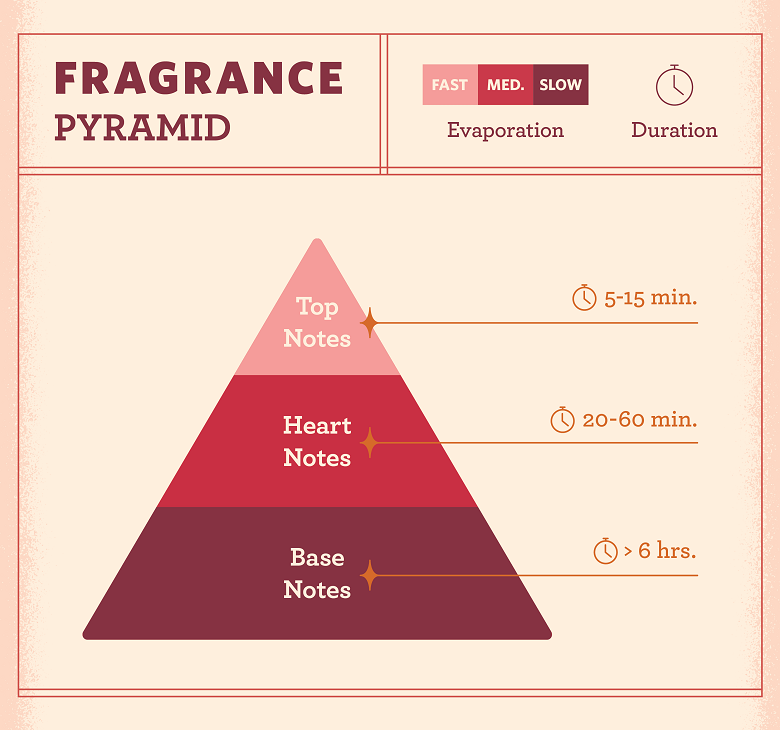
The pyramid is a simplified way of describing how a scent develops. Top notes are what you smell first and tend to fade soonest. Heart notes form the main character once the opening settles. Base notes are the slower materials that remain longest. The stages blend into one another rather than switching on and off, so use the pyramid as a rough guide to the order of impressions, not a precise timetable.
Notes versus accords
A listed note can describe a single material, but it can also describe an accord, which is a blend built to suggest a smell. That is why you may see notes such as peach, cherry or ocean in perfumes that contain no fruit or seawater. For definitions of terms like accord, drydown and sillage, see our perfume glossary.
Do not count notes as a quality score
A long pyramid is not proof of complexity or expensive ingredients. The same named note can be light, creamy, smoky or dry in different compositions. Look for descriptions of the overall character rather than choosing the bottle with the most familiar words.

Why sellers list different notes for the same perfume
Note lists are usually written by the brand, a retailer or a fragrance community, and they do not always agree. Reformulations, different batches and renamed versions can all change what a listing says. When two sources conflict, treat the detail as uncertain and rely on what you actually smell in a sample.
Compare descriptions with a small test
Make a two-column note: what the listing suggests and what you actually smell. Revisit after the opening and later in the day. If several sellers give conflicting pyramids, use the exact bottle label and manufacturer information where available, and treat the disputed detail as uncertain. Do not merge different flankers into one description.
Comparison at a glance
| Listing clue | Useful interpretation | Check before buying |
|---|---|---|
| Citrus opening | May give a bright first impression | Whether the later scent becomes sweet or woody |
| Floral heart | Flowers are part of the central character | Whether you like that floral style |
| Wood or amber base | May shape the drydown | Whether the finish feels dry, soft or dense |
Maison Alhambra products to compare
These editorial suggestions use the scent directions in our catalog. Choose a sample where available and compare the finished perfumes yourself; no measured wear-time ranking is implied.
| Product | Catalog bottle size | Why compare it |
|---|---|---|
| Porto Neroli | 80 ml | Compare a citrus/floral listing with its actual drydown. |
| The Tux | 90 ml | Compare a warmer amber direction with the fresh option. |
| Bright Peach | 80 ml | Use a fruit-led fragrance to explore how fruit and sweetness differ. |
Questions readers ask
Are notes usually printed on the bottle?
Often they are in marketing descriptions rather than on the bottle itself. The ingredient declaration serves a different purpose.
Can notes tell me whether a perfume is office-safe?
No. The amount applied, actual projection and workplace preferences matter more than a note list.
Read next: What are Fragrance Notes? Top, Heart + Base Notes Explained · Perfume Ingredients: Oils, Absolutes & Synthetics · How to Test Perfume at Home: The Right Way
Catalog details checked 11 October 2026. Prices, packaging and availability can change. Some product links lead to Amazon; purchases may earn us a commission. Affiliate disclosure.